



Brass CNC Machining Service: Precision Manufacturing for Complex Metal Parts
Brass CNC Machining Service has become an important solution for manufacturers that require stable dimensional accuracy, clean surface finishes, and efficient production performance. From electrical connectors and plumbing fittings to automotive components and precision industrial parts, brass remains one of the most practical materials for CNC machining applications in 2026.
Compared with harder metals, brass offers excellent machinability, stable chip control, and reduced tool wear. These advantages help manufacturers improve production efficiency while maintaining consistent part quality across both prototype and volume production runs.
For buyers sourcing custom metal components, understanding how Brass CNC Machining Service works can help reduce manufacturing risks, shorten lead times, and improve long-term product reliability.
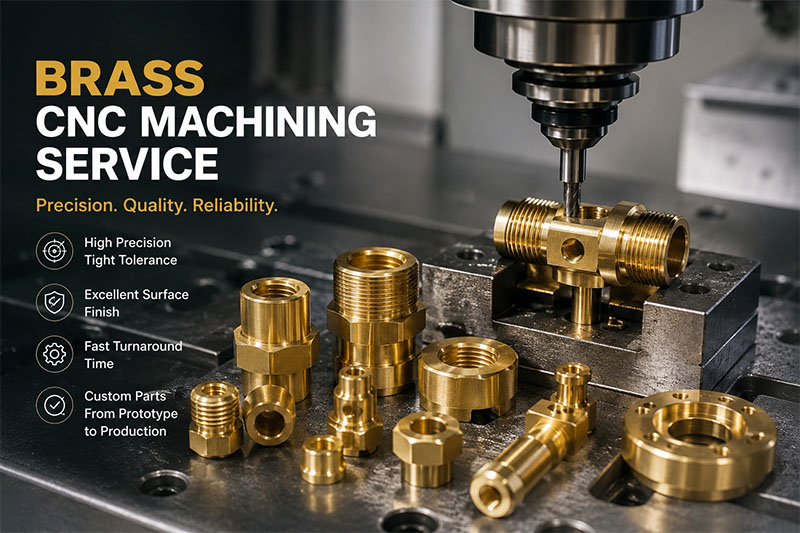
Why Brass Remains a Preferred CNC Machining Material
Brass is a copper-zinc alloy known for its balanced combination of strength, corrosion resistance, electrical conductivity, and machining efficiency. Because the material cuts cleanly during machining, manufacturers can achieve tight tolerances without excessive tool stress.
Unlike some metals that generate unstable chips or rough edges, brass supports smoother machining operations. As a result, production lines can maintain higher consistency during milling, turning, drilling, and threading processes.
Several characteristics make brass especially suitable for CNC machining:
- High machinability for faster production
- Stable dimensional accuracy
- Excellent corrosion resistance
- Good electrical conductivity
- Smooth surface finishing capability
- Reduced risk of burr formation
- Reliable performance in precision assemblies
These advantages explain why brass components are widely used in industrial systems that require long-term stability and repeatable manufacturing quality.
Common Applications of Brass CNC Machining Service
Modern industries continue expanding the use of precision-machined brass parts because the material performs well in both mechanical and electrical environments.
Electrical and Electronic Components
Brass provides reliable electrical conductivity and dimensional consistency. Manufacturers commonly use Brass CNC Machining Service for:
- Electrical terminals
- Connector pins
- Sensor housings
- Switch components
- Conductive inserts
Precision threading and stable tolerances help ensure proper electrical contact during assembly.
Plumbing and Fluid Control Systems
Brass has strong resistance to corrosion and water exposure, making it suitable for fluid handling systems.
Common brass plumbing components include:
- Pipe fittings
- Valve bodies
- Hose connectors
- Compression fittings
- Flow control components
CNC machining allows manufacturers to produce leak-resistant threads and accurate sealing surfaces for high-reliability applications.
Automotive Industry Applications
Automotive manufacturers increasingly use brass components in systems requiring conductivity, wear resistance, and corrosion protection.
Examples include:
- Sensor fittings
- Battery terminals
- Fuel system connectors
- Cooling system components
- Precision bushings
Because brass machines efficiently, suppliers can maintain consistent production quality even during high-volume manufacturing.
Industrial Equipment and Automation
Industrial automation systems often rely on custom brass parts for pneumatic systems, instrumentation, and mechanical assemblies.
Applications include:
- Pneumatic connectors
- Instrument housings
- Threaded inserts
- Precision spacers
- Bearing components
Stable machining performance helps reduce tolerance variation during batch production.
CNC Machining Processes Used for Brass Parts
A professional Brass CNC Machining Service normally combines several machining technologies depending on the complexity of the component.
CNC Turning
CNC turning is commonly used for cylindrical brass components such as fittings, shafts, and threaded connectors. Modern turning centers can achieve high-speed production while maintaining tight tolerances.
CNC Milling
Complex geometries, slots, holes, and surface features are typically produced through CNC milling operations. Multi-axis milling improves machining flexibility for intricate brass components.
Drilling and Tapping
Many brass parts require precision internal threads and deep-hole machining. Brass supports stable drilling performance and cleaner thread generation compared with harder materials.
Surface Finishing
Although brass naturally produces a smooth surface during machining, additional finishing processes may include:
- Polishing
- Sandblasting
- Nickel plating
- Chrome plating
- Passivation
The selected finish depends on both appearance requirements and environmental conditions.
Advantages of Using Brass CNC Machining Service
Choosing the right material directly affects production efficiency, cost control, and product quality. Brass offers several operational advantages for CNC manufacturing projects.
Faster Machining Efficiency
Brass cuts smoothly and generates stable chips, allowing higher spindle speeds and reduced machining resistance. Faster machining cycles help lower overall production time.
Improved Tool Life
Compared with stainless steel and titanium, brass causes less tool wear. Reduced tooling consumption can help manufacturers improve long-term production efficiency.
Better Surface Finish Quality
Brass components typically achieve smoother surfaces directly from machining operations. This reduces the need for excessive secondary polishing or finishing.
Tight Tolerance Capability
Precision CNC equipment can achieve highly accurate dimensions with brass materials. Tight tolerances are especially important for threaded parts, connectors, and sealing components.
Cost-Effective Production
Although raw material costs vary, the high machinability of brass often reduces overall processing costs through faster cycle times and lower tool consumption.
Important Factors When Selecting a Brass CNC Machining Supplier
Not all suppliers provide the same manufacturing capabilities. Buyers should evaluate several factors before selecting a Brass CNC Machining Service provider.
Material Grade Control
Different brass grades offer different performance characteristics. Common grades include:
- C360 brass
- C260 brass
- Lead-free brass
- Naval brass
Reliable suppliers should provide material traceability and consistent sourcing standards.
Machining Tolerance Capability
Precision parts require advanced CNC equipment and stable quality control systems. Buyers should confirm achievable tolerances based on project requirements.
Surface Treatment Options
Some applications require additional corrosion protection or cosmetic finishing. A supplier with integrated finishing capabilities can simplify the production process.
Quality Inspection Systems
Professional manufacturers typically use:
- CMM inspection
- Thread gauges
- Surface roughness testing
- Dimensional verification
- Material certification
Consistent inspection procedures help reduce batch inconsistency.
Production Capacity
A capable supplier should support:
- Prototype machining
- Small-batch production
- Medium-volume manufacturing
- Long-term supply programs
Flexible production capacity becomes increasingly important for global procurement teams managing unstable demand cycles.
Brass CNC Machining Trends in 2026
The CNC machining industry continues evolving toward higher precision, faster turnaround, and smarter automation systems.
Several trends are shaping Brass CNC Machining Service development in 2026:
- Increased demand for low-volume custom manufacturing
- Greater use of multi-axis CNC machining
- Faster digital quotation systems
- Integration of automated inspection equipment
- Growing demand for lead-free brass materials
- Higher expectations for traceability and quality documentation
Manufacturers that combine automation with stable process control are becoming more competitive in global supply chains.
Conclusion
Brass CNC Machining Service continues to play an important role across electronics, automotive, plumbing, industrial automation, and precision engineering industries. The material’s excellent machinability, corrosion resistance, and dimensional stability make it highly suitable for custom CNC manufacturing.
For buyers seeking reliable production quality, selecting an experienced CNC machining supplier with strong quality systems and flexible manufacturing capabilities can significantly improve project performance.
As manufacturing requirements continue advancing in 2026, precision brass machining remains a practical and efficient solution for complex metal component production.
